Fitting detail · 20 Nov 2026
Magnetic PVC seals: the stripe, the compression and the year it stops closing
A shower door's seal is a PVC profile with a magnetic stripe. It closes by compression, not by magnetism, and the compression is set at installation.
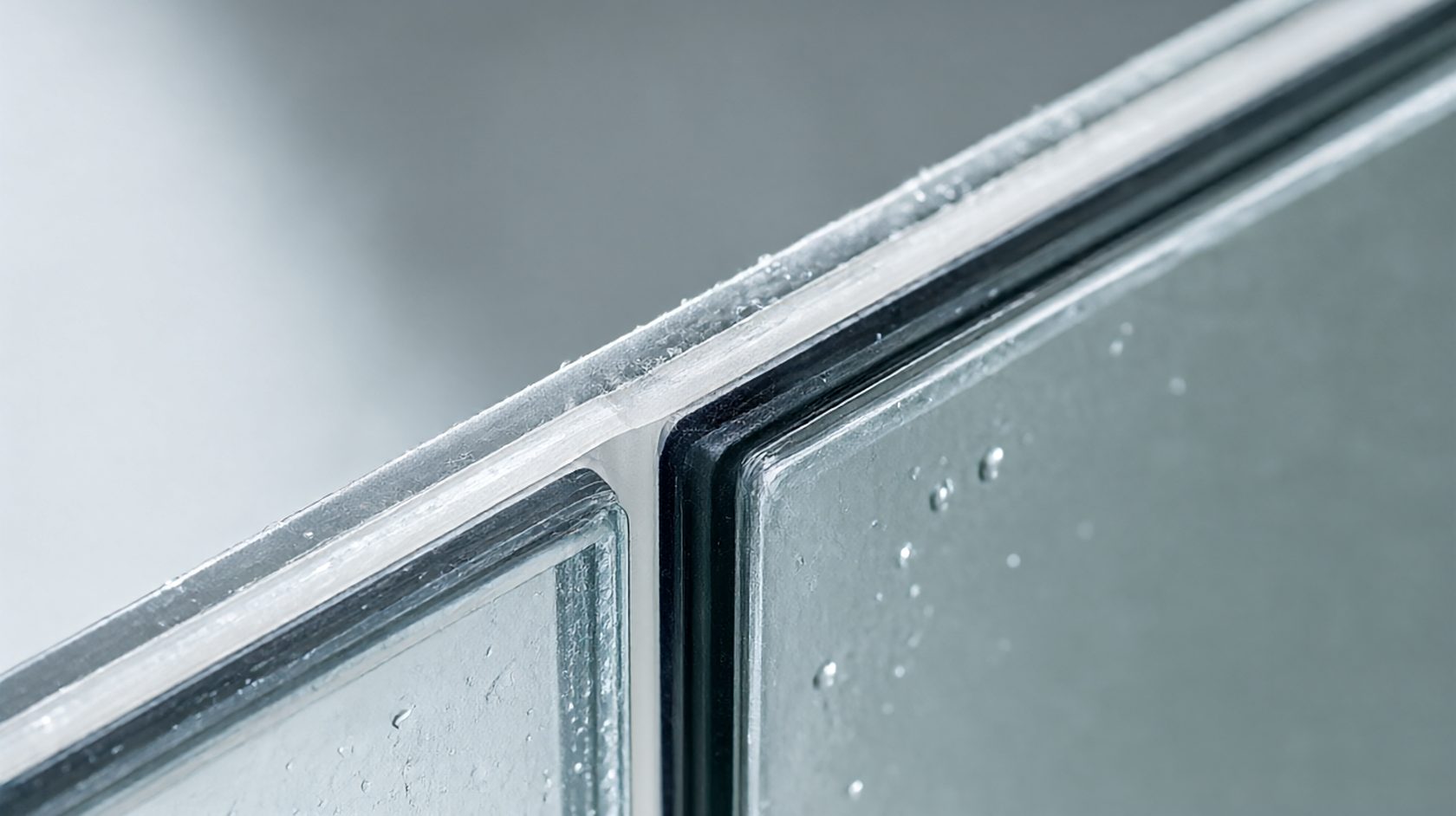
What the magnet is for
The magnetic stripe's job is to hold the two leaves together, not to seal them. The sealing is done by the PVC lips that compress against each other.
A magnet that is strong enough to pull the leaves together at the last centimetre is a magnet doing its job; a magnet that has to close a millimetre gap is compensating for an installation error.
The stripe's polarity matters in a pair: a seal that is supplied as north and south will attract its mate, and a pair shipped without polarity marking will repel half the time.
A seal that is installed upside down is a seal whose magnet repels, and the symptom is a door that pushes itself open at the bottom.
Compression, not contact
The PVC lip seals when it is compressed by the other leaf, and the compression is usually a few tenths of a millimetre.
A gap that is larger than the lip's compression range is a gap that leaks and a magnet that does nothing for the water.
The overlapping dimension should be set at installation and checked with a strip of paper: if the paper pulls out with no resistance, the seal is not compressed.
A seal that only touches is a seal that leaks at the first shower, and the leak is invisible until the floor shows it.
The profile's material and its plasticiser
A PVC seal is softened with a plasticiser, and the plasticiser migrates out over time, which makes the seal hard and brittle.
A seal that has hardened loses its compression and cracks at the lip, and the crack is where the water passes.
The plasticiser's type matters: a phthalate-free plasticiser is specified for markets that regulate it, and its migration rate is different from the cheaper one.
The specification should give the material, the plasticiser type and the expected service life at a temperature, because a seal's life is set by its chemistry.
UV, temperature and the bathroom's cycle
A shower seal sees a daily cycle of hot water, steam and drying, and the cycle ages PVC faster than a constant temperature would.
UV from a window is the other ageing factor, and a seal on a door facing a window discolours and hardens earlier.
The seal's service life should be stated at the bathroom's conditions rather than at room temperature, because the difference is a factor of two.
A seal that is sold as a lifetime item is a seal that will be replaced in five years, and the specification should say so.
The magnetic stripe's force and its decay
The stripe's holding force is measured in grams per centimetre of length, and the force decays with temperature and with time.
A stripe that holds a door closed at 20 degrees may not hold it at 45 degrees in a hot bathroom, because the magnet's strength falls with temperature.
The stripe's coating protects it from water; an uncoated stripe rusts and loses force, and the rust shows as a brown line on the seal.
The specification should give the holding force and the maximum service temperature, and a seal without those two numbers is a seal that is specified by its colour.
The ends, the corners and the cut
A seal is cut to length on site, and the cut's squareness decides whether the ends meet without a gap.
A corner where two seals meet needs a moulded corner or a mitre, and a butt joint at a corner is a gap that the magnet cannot close.
The seal's end should be sealed or capped where it meets the frame, because an open end lets water into the profile's hollow section.
The installation sheet should show the cut length, the corner treatment and the end cap, because those three details decide the seal's performance more than the profile does.
Replacement, part numbers and the wrong seal
A seal is a consumable and should have a part number, a length and a profile drawing, so that a replacement can be ordered without measuring the old one.
A seal that is substituted with a similar profile is a seal whose compression and magnet force are unknown, and the door will behave differently.
The part number should include the profile's orientation, because a seal that is symmetric looks identical and is not.
A brand that publishes the part number is a brand whose seals are replaced rather than improvised, and the product's life extends by the difference.
What to specify and what to check on site
Specify the profile drawing, the material and plasticiser, the magnet force, the service temperature, the length and the part number.
Check on site with a paper strip for compression, a straight edge for the door's alignment, and a visual check for polarity before the seal is cut.
A door that is out of alignment will not compress a seal however good the seal is, and the seal will be blamed.
The two checks that prevent that blame are the door's plumb and the seal's compression, and both take a minute.
The door's weight and the seal's compression
A heavy door compresses the seal more than a light one at the same alignment, and the seal's lip takes a permanent set sooner.
A door whose hinges have sagged compresses the seal at one end and leaves a gap at the other, and the magnet cannot close the gap.
The seal's compression should be checked at both ends of the door, not only at the handle's side.
A seal that is blamed for a leak is often a hinge that has dropped two millimetres, and the check is a straight edge along the door's edge.
Cleaning agents and the profile's surface
A bathroom seal is cleaned with the same agents as the tiles, and some of those agents attack PVC's plasticiser.
A solvent-based cleaner will soften the profile and dull its surface, and a chlorine bleach left in contact will discolour it.
The installation sheet should name the cleaners that are acceptable, and the list is short: a mild detergent and water.
A seal that is cleaned with the wrong agent fails in a year, and the failure looks like a material fault rather than a maintenance one.
Three numbers for the tender
The tender needs the holding force at a stated temperature, the compression range and the service life at the bathroom's conditions.
A seal quoted without the temperature is a seal whose force will be judged on the hottest day, and it will be judged wrong.
The compression range is the number the installer needs, and the service life is the number the maintenance budget needs.
A seal is a consumable, and a consumable without a life figure is a consumable that is replaced when it fails rather than before.
The three numbers turn a strip of PVC into a specified component, and the door's behaviour follows the specification.
Installation check in five minutes
Check the door's plumb, the seal's polarity, and the compression at both ends of the door with a paper strip.
Then close the door from a hand's width open and watch whether the magnet completes the last centimetre without a push.
A seal that needs a push is a door that is out of alignment, and the alignment is the cheaper fix.
Record the seal's part number and its installation date on the door's service label, so that the replacement is ordered before the leak.
Closing note
The magnet holds the door and the lip seals the water, and the two functions fail at different times for different reasons.
Specify the force, the compression and the life, and check the door's alignment before the seal is blamed for a leak.
A seal whose replacement part number is on the door's service label is a seal that is ordered before the leak rather than after it.
The seal specified with a holding force and a service temperature is the PVC seal with magnetic stripe, and both numbers are needed before a door's alignment can be judged.
What to check
- Profile drawing and part number published
- PVC material and plasticiser type
- Magnetic holding force in g/cm
- Maximum service temperature and expected life
- Polarity marking on the pair
- Compression range and installation check method
- Corner treatment and end cap detail